

On the wall of our dining room hangs a decorative banner with a quote from Ian MacLaren that reminds us:
BE KIND,
FOR EVERYONE
YOU MEET
IS FIGHTING
A HARD
BATTLE
Almost everyone I talk to is feeling the heaviness of the world right now. We’re all carrying the weight of the week’s headlines, the plight of those whose suffering is on display, and the tension of the cultural division we’re experiencing.
It’s just hard.
Especially right now.
But we get through, right? If you’re reading this, you made it to another day. We manage, somehow, to keep going.
Sam Fischer’s 2023 hit, Carry It Well, captures how so many of us are feeling these days…
Just because I carry it well
doesn’t mean it isn’t heavy,
and I don’t need some help
I know I keep it locked down,
but all I want now
Is somebody who can tell me
how it’s gonna turn out
‘Cause I thought I’d be
doing better by nowI thought I’d be doing better by now
But don’t I carry it well?
It’s understandable if you feel heavy right now.
Our circumstances are not new. We get to look back in time to the examples of our predecessors in the faith.
The world has always had struggles. If we rewind twenty centuries, we find Jesus and his followers trying to navigate life under Roman imperial rule. And this is where the early churches fascinate me.
Early churches popped up in homes along ancient trade routes in one community after another from Jerusalem to Rome before the closing of the Book of Acts. And in their turbulent surroundings, they managed to set aside their own need for power, wealth, and comfort in order to care for one another, help the poor, welcome the stranger, and grow in their faith.
Even when facing martyrdom, they loved their enemies, forgave their persecutors, and stood valiantly alongside all who were otherwise cast aside by the rest of society.
How’d they do it?
Three words: With. One. Another.
There is tremendous power in the realization that we need each other.
One of my favorite books from the last few years is Terry Real’s Us: Getting Past You & Me to Build a More Loving Relationship. Terry addresses our cultural conundrum by digging into the physiology we all share:
Our nervous systems were never designed to self-regulate. We all filter our sense of stability and well-being through our connection to others. And yet the culture of individualism saturates our society. The idea of a freestanding rugged individualist is a cultural story having little to do with the truth.
Terry further dives into the science of why we need each other on a physical and biological level. When two stressed out people meet each other - even as strangers - their brains relax slightly.
The emotional load sharing and efficiency of the “group mind” leaves each individual’s prefrontal cortex with a lot less work to do than it would have on its own.
In other words…
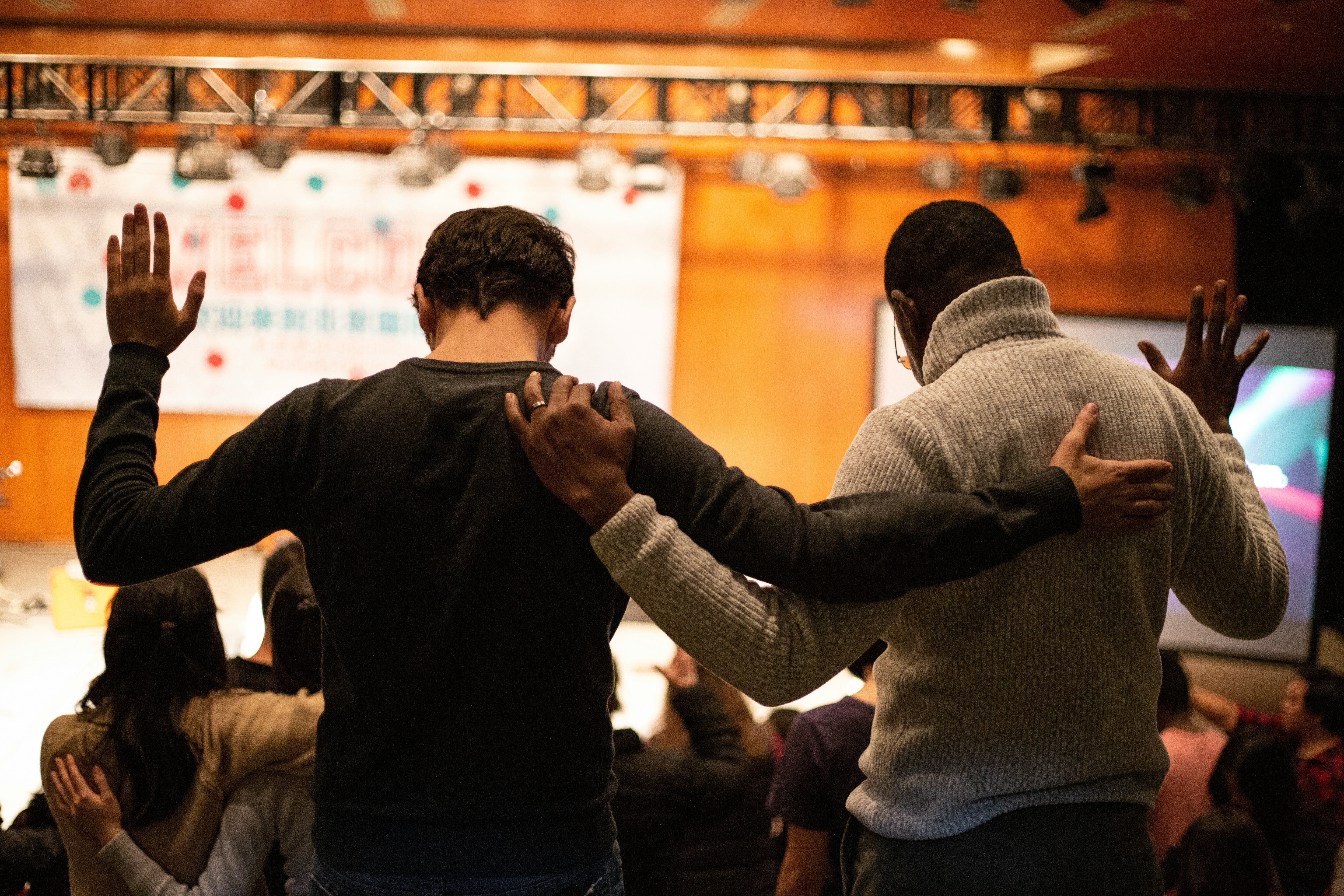
God created you for connection and community rather than isolation. The world is heavy, but we get to do a team lift and carry it all together rather than separately.
In the early accounts of the church, we see Jesus’ followers huddling up together to share their fears and to carry each other’s burdens. The same happened in Black churches across the Jim Crow south and Bonhoeffer’s communities gathering secretly under the shadow of Hitler and the Nazis.
What is happening in Minneapolis-St. Paul right now offers an important lesson for all of us. The killing of Renee Good and Alex Pretti by ICE agents didn’t occur in a community completely ambushed by national tragedy. Just six years ago, George Floyd was murdered in the same town as Good and Pretti, sparking nationwide protests.
That period of social unrest in the Twin Cities instigated a kind of unified effort by local churches and organizations to build neighborhood networks that could spring into action.
Bishop Greg Loya, who leads The Episcopal Church in Minnesota, was recently interviewed by Bishop Rob Wright on his podcast For People and said this about the situation on the ground:
“On the one hand, we’re seeing a campaign of cruelty and intimidation and violence. On the other hand, we’re seeing the faith community mobilizing for love.”
I can’t carry it all.
You can’t carry it all.
But WE can carry it together, especially as followers of the One who took on the weight of all the world’s sin and brokenness and offered his life on the cross, proving that the Way of Love trumps political power and financial prosperity.
Yes, we must open our eyes, but we don’t have to see everything, everywhere, all at once. Our exposure to an avalanche of bad news, packaged for endless scrolling, is a relatively new innovation.
Yes, we must allow our hearts to break and to remain softened to the pain people are experiencing, but we can’t save everyone in the world from suffering.
Yes, we must get off the porch and into the work, but we can’t fix all that is broken in our own effort alone. It takes community, commitment, and time.
Caring about people, especially large numbers of people you can’t directly help, leaves us feeling alone and helpless, but here’s the good news:
You’re not the only one.
You don’t have to carry it all by yourself. We can lean into community and find strength in each other.
Angie and I recently attended a gathering hosted by White Men for Racial Justice (I highly recommend their Foundations course for a primer on the roots of systemic racism). The room was packed with friends and neighbors in Northwest Arkansas who were showing up to declare a readiness to act.
I walked out of the building that night feeling something quite powerful - solidarity. We may not be able to fix all of the inequalities we still see operating around us, but together, we can make a bigger dent. Together, we can do more.
This is one of the reasons I can’t give up on the church as an institution for hope and change in the world. While I am continually frustrated by the hijacking of the Christian message through the rise of Christian nationalism, I also see churches stepping up.
One of the greatest lessons I’ve learned about myself in the last few years is this:
When I isolate and lean away from people, I struggle. But when I engage and lean into community with others, I find healing.
I’m convinced that’s true for all of us. Because we’re human. Because we’re all made in the image of an eternally relational God.
It’s hard. Healthy relationships require intentionality and discipline. Movements require leadership. Churches require shepherding. And none of it is easy.
How do you start?
Choose one person you know and encourage them with a text, phone call, or a coffee meetup.
Choose an issue that breaks your heart and learn about it, engage with it, and support those who are leading the way in that cause.
Show up in places of worship and service with a willingness to share your life with others in meaningful ways.
Create art, or music, or poetry, or write your heart out to inspire someone else, knowing that everyone you meet is fighting a hard battle.
When we lean into community and offer mutual sharpening and encouragement, the load gets a little lighter for each of us.
You don’t have to carry it all.
We can all carry it together.