

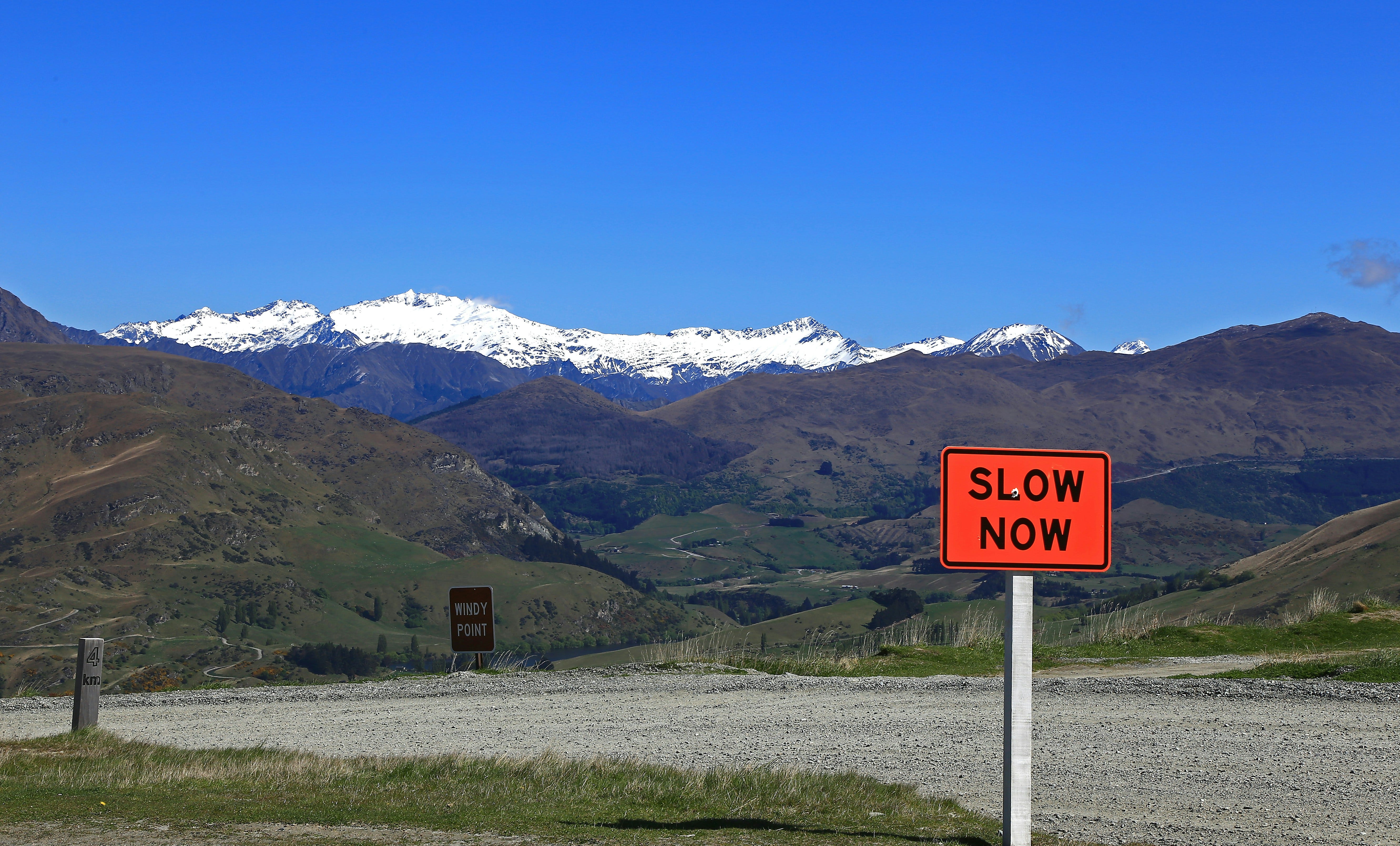
I’m going all in on Slow.
We celebrate speed. Power. Achievement. Breakthrough. Momentum.
And Slow rarely gets celebrated.
I think, as a leadership coach, Slow is one of my greatest strengths. I help people slow down, think, meditate, sit with questions, and consider their lives deeply.
In my family, Slow helps me navigate the day-to-day without losing my cool with the people I love most in the world. If my mind starts to race, Slow is the antidote.
In the local church, I’ve found my proclivity to be Slow to quite challenging. Keeping up. Making the meetings. Getting the things done so we can succeed.
But Slow doesn’t get a lot of positive press coverage as a tactic for surving and thriving in a chaotic world.
Speed is a highly useful tool. Sometimes speed is absolutely necessary. But speed is not a virtue, despite the fact that our culture has elevated it to virtue status.
Hurry has become our default setting. We measure our worth by our output, our value by our productivity, our significance by how much we can accomplish in a day.
But hurry is not neutral. It has a spiritual cost.
When we hurry, we skim the surface of our own lives. We miss the texture of the present moment. We barrel past the quiet invitations to notice, to feel, to connect. We become strangers to ourselves, operating on autopilot, responding rather than choosing, reacting rather than reflecting.
When we give in to the pressure to hurry (which almost always comes from external sources), we become human doings instead of human beings.
Speed promises us everything and delivers exhaustion and anxiety if we don’t learn how to keep speed in its proper place.
Slow is not about doing less, though sometimes it requires that. It’s not about laziness or avoidance, though it can be mistaken for both.
Slow is a spiritual practice. It’s an act of resistance against the tyranny of hurry.
This is what I do as a leadership coach, though I didn’t always have language for it. I help people slow down and wrestle with deep and fundamental issues surrounding identity and vision.
It often takes a lot of conversation to help someone shift their emphasis from what they should be doing to who they are becoming.
Remember what the late Zig Ziglar often said, ““You’ve got to BE before you can DO, and DO before you can HAVE.”
In my family life, Slow is how I survive. It’s the only way to really listen to what my wife and kids are really saying. It’s the only way to sort out any racing thoughts that come bursting into my brain at the wrong moment. When there is conflict, always start by setting the pace to Slow as you discuss the issue at hand.
In the church, Slow is harder to do - at least in the average evangelical church in North America. The church often baptizes Speed because the cause is “worth it.” Spending a ton of time and energy on the machinery, ministries, and special events of a local church can feel as overwhelming as a project in a corporate environment.
Families are busier than ever. When I was a Lead Pastor, we (softly) required our staff members to spend the majority of their weeknights at home, not at another church-related meeting. There were a few exceptions during the year leading up to a big event or special Sunday, but we purposely limited them to a handful per year, no more.
My friend Shawn Lovejoy, who coached me through my early church planting years, wrote a book every church leader should read entitled Measuring Success: Your Path To Significance, Satisfaction, & Leading Yourself To The Next Level, in which he says this:
The tyranny of the urgent keeps us from developing our strengths and improving our weaknesses. Over time, too many of us get mentally flabby. We stop growing as preachers. We stop growing as leaders. As a result, our congregations suffer as we offer our brand of “good enough” ministry and vision. The consequences of our poor decisions or waffling ideas wreak havoc on the people we lead—or fail to lead.
I sometimes write code as part of my website development work, but code isn’t my specialty, so I sometimes end up with “bloated” code, which is when you have way more code than necessary to accomplish something simple.
I think the modern Western church has fallen into ministry bloat. We’re investing staff and volunteers' time and energy in efforts that don’t always achieve the very simple goal of helping people become fully formed disciples of Jesus in the context of healthy community.
We have meetings to make. We have metrics to meet. We have growth to achieve. Success is ours to secure. The language is different, but the drumbeat is the same:
Other churches are getting ahead.
We could be doing so much more!
We could get it all done faster.
But Jesus…
Okay, slow down and read this part carefully…
Jesus took naps on boats, welcomed interruptions from strangers, and took time to notice people who would otherwise go unseen and unnoticed.
He withdrew from the crowds, repeatedly, to commune with the Father or to share his time with just one person instead of the masses.
Jesus found ways to be present in his own life and circumstances, available for deeper conversations with people, and grounded in his own identity and relationship to God.
While I do believe Jesus was “busy” in terms of his travels and ministry activity, he also set the example for using Speed as a tool when it was useful, and Slow as he nurtured relationships with friends, family, followers, and with the Father.
When we slow down, we don’t lose time—we gain depth. We gain presence. We gain access to our own wisdom, our own intuition, our own connection to the Divine.
We become available to our lives as they actually are, not as we wish they were or fear they might become.
John Mark Comer wrote an excellent book on this topic entitled The Ruthless Elimination of Hurry: How to Stay Emotionally Healthy and Spiritually Alive in the Chaos of the Modern World. He writes,
“Love, joy, and peace are at the heart of all Jesus is trying to grow in the soil of your life. And all three are incompatible with hurry.”
Slow allows us to live from the inside out, rather than being pulled along by the external demands that never stop coming. It helps us discern what truly matters from what merely shouts the loudest.
I can’t give you permission to slow down—you don’t need it. You don’t need anyone’s approval to stop hurrying through your one precious life.
But I can tell you this: it’s hard. Our entire world is engineered to keep you moving, scrolling, consuming, and producing.
Choosing Slow is choosing to swim upstream.
People will misunderstand. They’ll mistake your depth for inefficiency, your thoughtfulness for indecision, your stillness for lack of ambition.
And some days you’ll forget. You’ll get swept up in the current, the urgency, the demands. You’ll find yourself right back in the shallows, skimming along the surface, wondering how you got there again.
But you can reconnect with Slow in this very breath. Feel your feet on the ground. Notice the light around you.
Take one full, deep breath and remember: you are more than what you produce, more than what you accomplish, more than how fast you move.
Slow is where we find ourselves again.
It’s usually where we find each other, too.
P.S. - I’m dedicating more of my own time coaching leaders and walking beside people to slow down and be successful in the ways that really count. Interested in a session? Read more about my leadership coaching.
Yes, to meet the life, to meet yourself, Slow is the new Fast…!!
I struggled for YEARS with everything you are talking about. If I am being honest, I still do to a degree. Embracing the understanding of slow as you outline it is key!